With their crisp exterior and soft chewy inside, it is no wonder that these are a favorite in our house. The leavening power of baking soda and cream of tartar causes the cookie to rise and fall quickly, giving it that desired crinkly top and slight tang. Rolled into balls, the dough will keep in the freezer for up to 1 month.
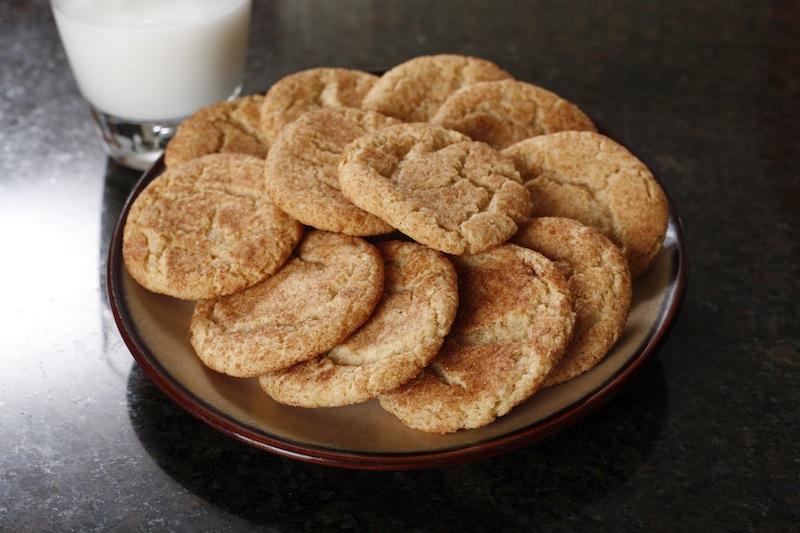
Snickerdoodle
With their crisp exterior and soft chewy inside, it is no wonder that these are a favorite in our house. The leavening power of baking soda and cream of tartar causes the cookie to rise and fall quickly, giving it that desired crinkly top and slight tang. Rolled into balls, the dough will keep in the freezer for up to 1 month.
Nutrition
Ingredients
Method
- In a small shallow bowl combine sugar and cinnamon, set aside for rolling
- Heat oven to 400 degrees. Line two large baking sheets with parchment paper.
- Whisk wheat starch, xanthan gum, pudding, baking soda, cream of tartar and salt in medium bowl; set aside
- In standing mixer fitted with paddle attachment or with hand mixer, beat butter, shortening, granulated sugar, and brown sugar at medium speed until light and fluffy, about 3 minutes, scraping down sides of bowl with rubber spatula as needed. Combine the egg and water and add to the butter mix. Add vanilla; beat at medium speed until combined, about 30 seconds. Add dry ingredients and beat at low speed until just combined, about 30 seconds, scraping down bowl as needed.
- Fill medium bowl halfway with cold tap water. Dip hands in water and shake off excess (this will prevent dough from sticking to your hands and ensure that sugar sticks to dough). Roll heaping tablespoon dough into 1 1/2-inch ball between moistened palms; roll ball in cinnamon sugar, then place on prepared baking sheet. Repeat with remaining dough, moistening hands after forming each ball and spacing balls about 2 inches apart on baking sheet (you should be able to fit 12 cookies on each sheet).
- Bake until cookies are beginning to set and the centers are soft and puffy, 9 to 11 minutes, rotating cookie sheet halfway through baking time. Cool cookies on baking sheet about 3 minutes; using wide metal spatula, transfer cookies to wire rack and cool to room temperature.
Notes
Reader Q&A:
Q: I followed this recipe exactly and the cookies all ran together into one giant bar and were extremely hard, any suggestions? Also, my granddaughter has a little higher tolerance, I would like to use a whole egg instead of half, and maybe all butter instead of the shortening? Side note: even though they came out poorly, they tasted fantastic! A: That should not have happened. Did you use a scale or dry cup measurements (I always recommend a scale)? Any chance your butter was too soft? If so putting the dough the fridge for 30 minutes will help. To this day I tend to do one test cookie before baking. If the batter spreads too much, I add an extra 2 tablespoons of wheat starch and try again. If it is still too much, I add another 2 tablespoons. (If they spread too little and are like golf balls, I add a tablespoon or two of water.). You could add a whole egg, just eliminate the water.
Q: I followed this recipe exactly and the cookies all ran together into one giant bar and were extremely hard, any suggestions? Also, my granddaughter has a little higher tolerance, I would like to use a whole egg instead of half, and maybe all butter instead of the shortening? Side note: even though they came out poorly, they tasted fantastic! A: That should not have happened. Did you use a scale or dry cup measurements (I always recommend a scale)? Any chance your butter was too soft? If so putting the dough the fridge for 30 minutes will help. To this day I tend to do one test cookie before baking. If the batter spreads too much, I add an extra 2 tablespoons of wheat starch and try again. If it is still too much, I add another 2 tablespoons. (If they spread too little and are like golf balls, I add a tablespoon or two of water.). You could add a whole egg, just eliminate the water.