In a small mixing bowl mix the yeast, flour and water until combined. Cover tightly with plastic wrap and preferably let sit overnight in the fridge to allow the yeast to slowly work its magic. Remove from the fridge and allow the starter to come to room temperature. If there are time constraints, make the starter with warmed water (110 degrees - no, I do not really stick a thermometer in it - think bath water for a baby) and cover, letting it rise for at least 30 minutes.
Bring the potato to a boil. Cook until tender. RESERVE potato water (it helps make the bread super soft) and rice or mash the potato. Sautee minced onion and celery in a tablespoon of butter until soft, about 5 minutes. Add remaining two tablespoons butter to pan to melt. Set aside.
Mix the starches, Metamucil, xanthan gum, onion powder, sage, thyme, parsley, pepper and salt in bowl of standing mixer fitted with the paddle attachment. Mix potato water, vegetable broth, honey, and starter together, preferably in a large liquid measuring cup. Turn machine to low and slowly add liquid. Add in the potatoes, sautéed onion, celery and butter mixture. Mix for one minute. It will be the consistency of a very thick but smooth cake batter.
Cover the mixer bowl with saran wrap and let rest for 5 to 10 minutes. The purpose here is not for the dough to rise, but to allow the liquids to be fully absorbed by the starches and make the dough more manageable to handle/shape.
Again with the paddle attachment, mix on low to medium setting (4 on Kitchen Aid) for 2 to 3 minutes, pausing the mixing halfway to scrape the dough off the sides of the bowl. You are incorporating air into the dough which the gas from the yeast will expand, allowing for a lovely rise. As the dough mixes, it will get a little stretchy, but still stick to the sides of the bowl. The dough should be nice and smooth.
Add a little wheat starch to your work area. With a rubber spatula, gather the dough from the mixer bowl and place on top of the starched area. Gently knead the dough a few turns, incorporating the remaining starch. You should have a nice smooth but somewhat sticky dough. Gently shape/roll the dough into a cylinder shape and place in a greased 8-by-4 inch loaf pan (which is slightly smaller than many bread pans). It should be touching all four sides of the pan.
Cover with lightly greased plastic wrap and a damp kitchen towel; set aside in warm spot* until dough almost doubles in size, about 60 minutes (but the time range can be from 45 minutes to 90 so keep an eye on it).
Meanwhile, place an empty loaf pan (or oven proof skillet) in the oven. Heat the oven to 400 degrees. Bring 2 cups water to boil.
Remove plastic wrap from loaf pan. Place pan in oven, immediately (and carefully) pouring heated water into the empty loaf pan; close oven door. The reason for this is that when dough first goes into a hot oven, there is a rapid rise in volume called oven spring. If there is moisture or steam (which is what you are creating with the hot pan and water), the starches do not form a crust as quickly, allowing for a greater “spring.”
Decrease the oven to 375 degrees.
After 30 minutes, brush the loaf with the remaining melted butter to help the browning. Bake for an additional 15 minutes. Remove loaf from the pan and place directly on the center of the rack (or pizza stone if it is in the oven). Continue baking until the loaf sounds hollow when rapt lightly with your knuckles on the bottom, about 15 minutes.
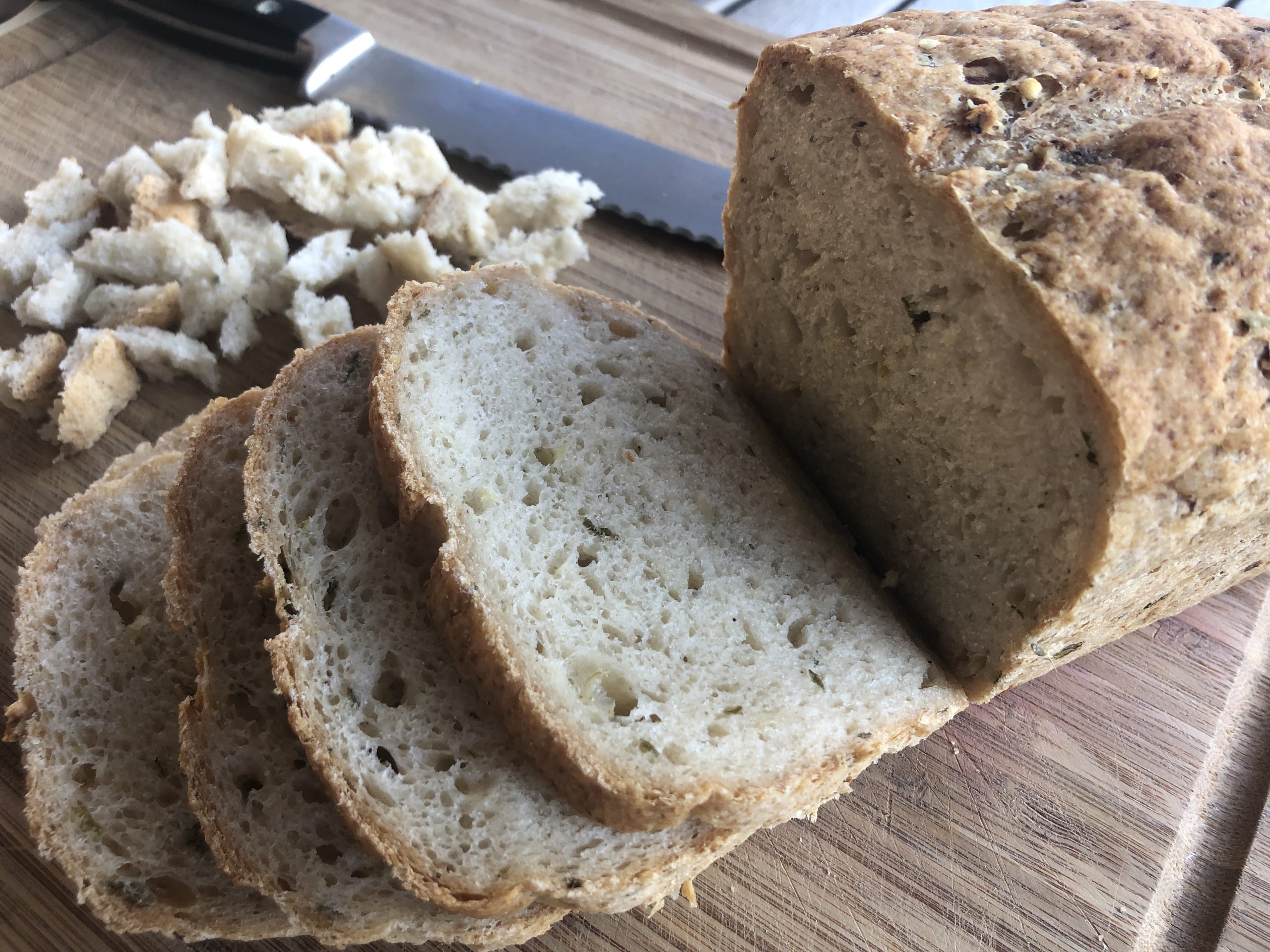
Remove bread from oven, place on a wire rack, and cool to room temperature. Slice and serve.