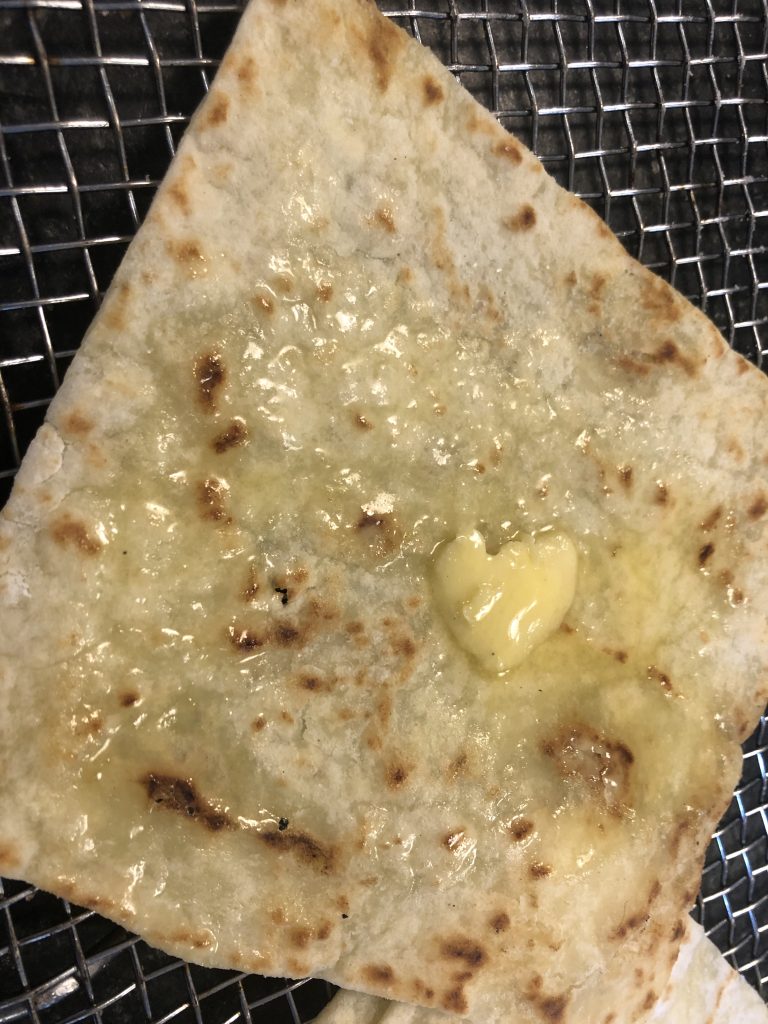
This wrap has more substance than a tortilla — more Gordita, pita like. It is super soft and crazy study. Best of all it freezes beautifully and is still pliable when it defrosts. It is a great one to bring in your bag stored in a ziplock bag placed in a folder (thanks Sarah Foster for this tip) when you are getting a salad to make it more substantial. Minor modifications and it is delicious naan bread!
Super Soft Flatbread Wrap
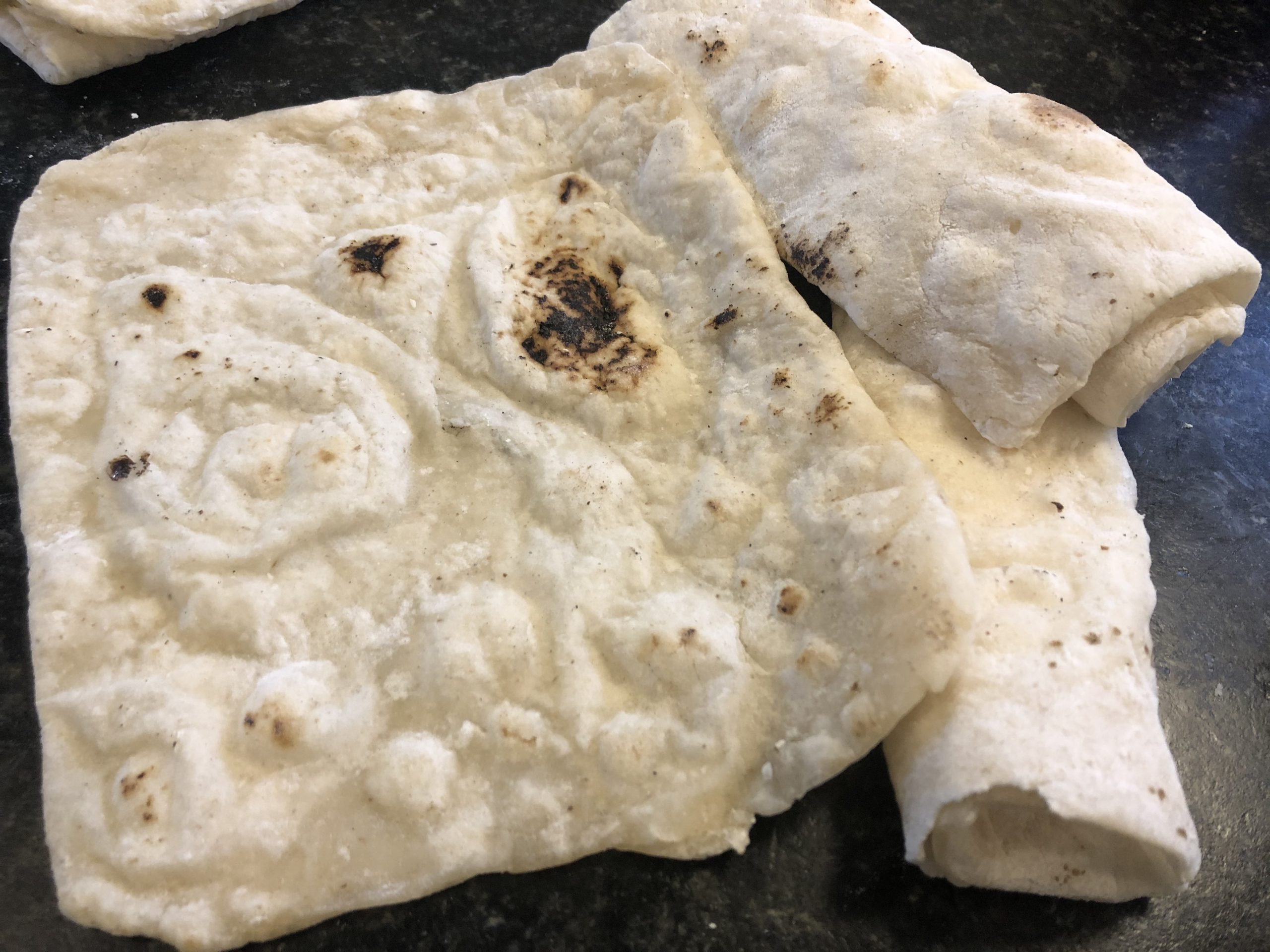
This wrap has more substance than a tortilla — more Gordita, pita like. It is super soft and crazy study. Best of all it freezes beautifully and is still pliable when it defrosts. It is a great one to bring in your bag stored in a ziplock bag placed in a folder (thanks Sarah Foster for this tip) when you are getting a salad to make it more substantial. Minor modifications and it is delicious naan bread!
Nutrition
Ingredients
Method
- In a small mixing bowl mix the yeast, flour and water until combined. Cover tightly with plastic wrap and preferably let sit overnight in the fridge to allow the yeast to slowly work its magic. Remove from the fridge and allow the starter to come to room temperature. If there are time constraints, make the starter with warmed water (110 degrees – no, I do not really stick a thermometer in it – think bath water for a baby) and cover, letting it rise for at least 30 minutes.
- Boil a small peeled potato in water until tender. Do not discard the water.
- Mix the starches, Metamucil, xanthan gum and salt in bowl of standing mixer fitted with the paddle attachment. Remove roughly one cup of the starch mixture, set aside.
- Add the boiling potato water to the starch mixture in the bowl. Stir until smooth. Cover with plastic wrap and set aside for 30 minutes. Adding boiling water gives a more chewy texture and the end result is a sturdier wrap.
- Add the remaining cup of starch mixture, the butter, honey, potato and starter to the cooled starch mixture. Mix for one minute. It will be the consistency of a very thick cake batter.
- Cover the mixer bowl with saran wrap and let rest for 5 to 10 minutes. The purpose here is not for the dough to rise, but to allow the liquids to be fully absorbed by the starches and make the dough more manageable to handle/shape.
- Again with the paddle attachment, mix on low to medium setting (4 on Kitchen Aid) for 2 to 3 minutes, pausing the mixing halfway to scrape the dough off the sides of the bowl. You are incorporating air into the dough which the gas from the yeast will expand, allowing for a lovely rise. As the dough mixes, it will get a little stretchy, but still stick to the sides of the bowl. The dough should be nice and smooth.
- Add a little wheat starch to your work area. With a rubber spatula, gather the dough from the mixer bowl and place on top of the starched area. Gently knead the dough a few turns, incorporating the remaining starch.
- Divide the dough into 10 equal 75 gm portions. Briefly knead and roll each portion you are using today on a lightly starched surface. Sprinkle with more starch and then roll each ball into a 7 x 6 rectangle.
- Five minutes before cooking the flatbread, heat a large heavy skillet (preferably cast iron) over medium-high heat.
- Working one at a time, carefully place the dough in the skillet. Cook until small bubbles appear on the surface of the dough, about 30 seconds. With tongs, flip the bread and cook until the bottom is speckled and deep brown in spots, about 2 minutes. Flip the bread over again and cook until the other side is speckled, 1 to 2 minutes longer.
- Transfer flatbread to a wire rack and cool for about 5 minutes. Wrap loosely in a clean kitchen towel. Freeze whatever you are not using in a ziplock bag once fully cooled.